

Topaasia is a small start-up team that has worked remotely for several years. Entrepreneurial passion and the challenges of disconnecting from work when working remotely have taught us the hard way that recovery is a theme worth waking up to sooner rather than later. Here is a pile of tested practices that we in the Topaasia crew have found to work for disconnecting from work in the era of remote work:
1. Delete email and instant messengers from your phone
Removing work communication apps from your phone is the best, fastest and easiest way to promote disconnecting from work. When we say "delete", we really do mean deleting, not just silencing notifications. Otherwise the temptation is simply too great to "just have a quick look at email" at 10 on a Saturday morning, and that can start a work-bound spiral of thoughts that takes away from being present with your family or from other recovery. One member of our team who works in sales has even acquired a separate phone for leisure time.
It may feel bad and almost impossible to delete the apps, but you will probably notice a wonderful feeling of calm, and you can always get the apps back if you absolutely must.
2. A separate leisure profile on your laptop (if you don't have a separate work computer)
If you have a separate work computer and a leisure computer, excellent! Problem solved.
If not, however, we recommend keeping a separate profile on your computer. The work profile has the logins to email, work intranets and messengers, but on the leisure profile side there are none at all.
3. Try to keep regular working hours that suit you
In remote work you can do whatever you please whenever you please, and that is nice. In our experience, however, freedom needs self-imposed constraints, and planned working hours are one of them. You may be a different character in this respect, and that is OK. We ourselves have found that it is better to set boundaries on work, and the thoughts related to it, than to let it take over without limits. After all, work often takes exactly the time and energy that is given to it.
4. Make your workdays good
Harder to put into practice is making your days good in such a way that you do not need to recover from them in the same way. That means planning the working week, for example in a notebook or a to-do app, taking regular breaks during the workday, resting your eyes, a better working posture, stretch breaks, mindfulness and other ergonomics of body and mind.
5. Form rituals
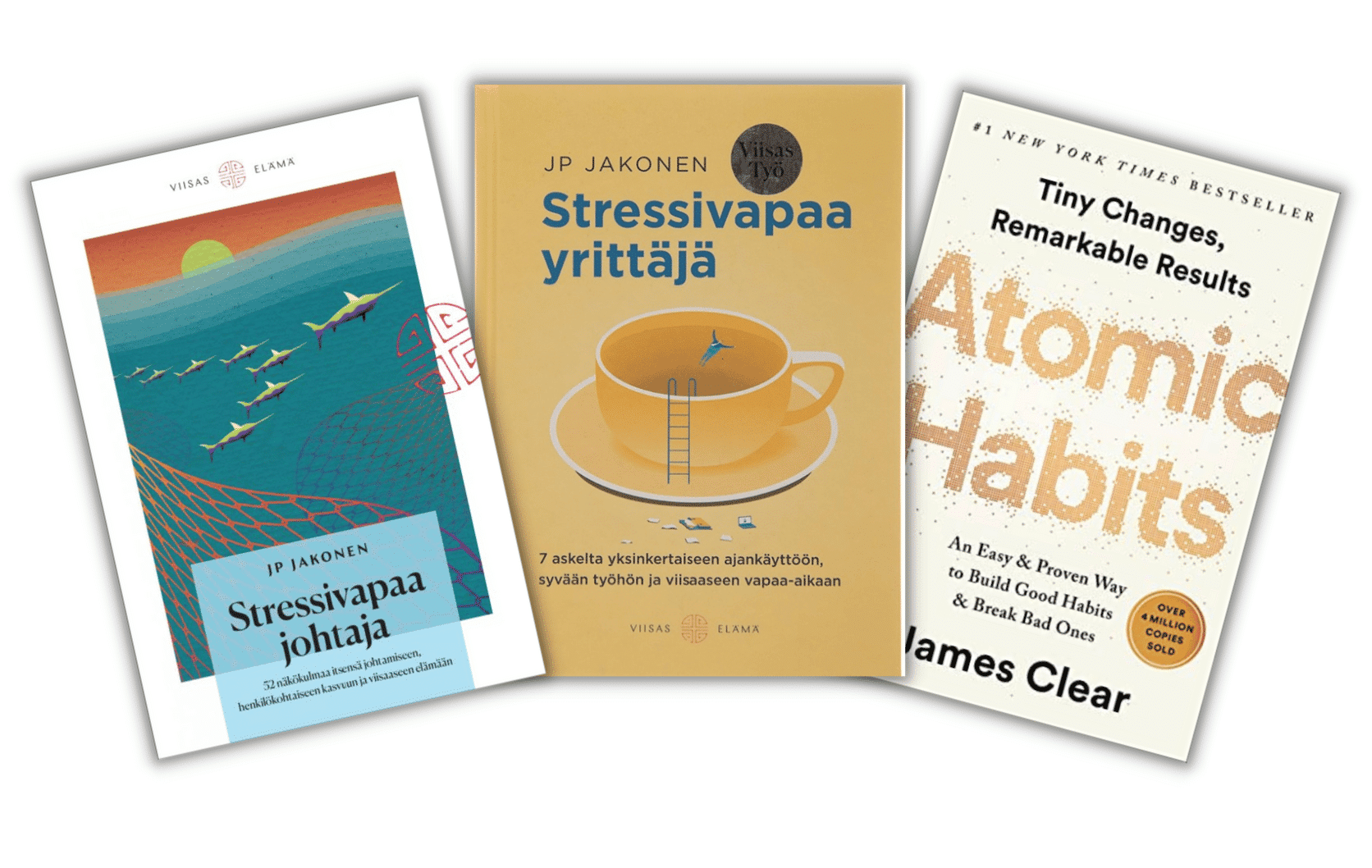
Form rituals for starting and ending work. These tell the mind what kind of mode to tune into. An example for ending the workday: Go through a physical to-do note, crumple it up and throw it in the bin. Or go through your bullet journal and mark off the day's items. Listen to a particular song, change your clothes, do something physical, go outside with the dog. On rituals and other stress management we warmly recommend JP Jakonen's works, especially the books Stressivapaa yrittäjä and Stressivapaa johtaja.
6. Make your environment friendly
James Clear's book Atomic Habits emphasises shaping your environment when it comes to forming habits. It simply means that if you want to lose weight and cut down on snacking, you don't leave sweets lying around in a bowl on the table. Better if they weren't in the whole house. In a work context it means that physical work items should be hidden away. If you have your own office room, close the door. Put your work phone in a cupboard and on silent. Out of sight, out of mind.
------------
Do you want to develop remote work practices through discussion in your own work community?