
Hoivatie is a social enterprise that provides social services for all age groups, from small children all the way to the elderly. The work is done nationwide by a workforce of around a thousand people. Hoivatie was born a few years ago when Oulu Deaconess Institute and Nuorten Ystävät merged their operations.
Development Director Mikko Oranen's desk covers the development of Hoivatie's services and the company itself. A major part of his role has been the new company's strategy work, in which Mikko has been actively involved. In the second strategy round, Topaasia's dialogue tool was also put to use.
At Hoivatie, employee participation is at the heart of development work. In the first strategy process this was carried out in the traditional way, through surveys and working group assignments, among other things. When the time came to update the strategy, Mikko considered an alternative to the rather laborious process. Since Topaasia was already a familiar tool, it was natural to start thinking about using it in strategy work as well. For this purpose, a customised Strategy into Everyday Work Topaasia deck was built for Hoivatie.
The deck as an aid to conversation
The deck was first introduced with the leadership teams, after which the games continued through the organisation in stages, all the way down to unit level. The specific aim of this approach was to let teams do self-assessment and discuss the themes of the strategy.
“I think of Topaasia as an aid to conversation that structures and focuses. It does not, however, dictate what is said. It defines what is talked about, but not the content of the discussion. At the same time, the tool keeps the conversation structured and manageable in terms of time”, Mikko describes.
Mikko feels that Topaasia changes the role of the internal facilitator in a good way. “If a manager facilitates the discussion, they may also steer or limit it, quite consciously or unconsciously, towards certain themes. But if they act as the game leader in Topaasia, the cards come to the people and people make choices the way they themselves want. The facilitator's role is much smaller. So in my view the tool supports equal participation.”
From documentation to analysis
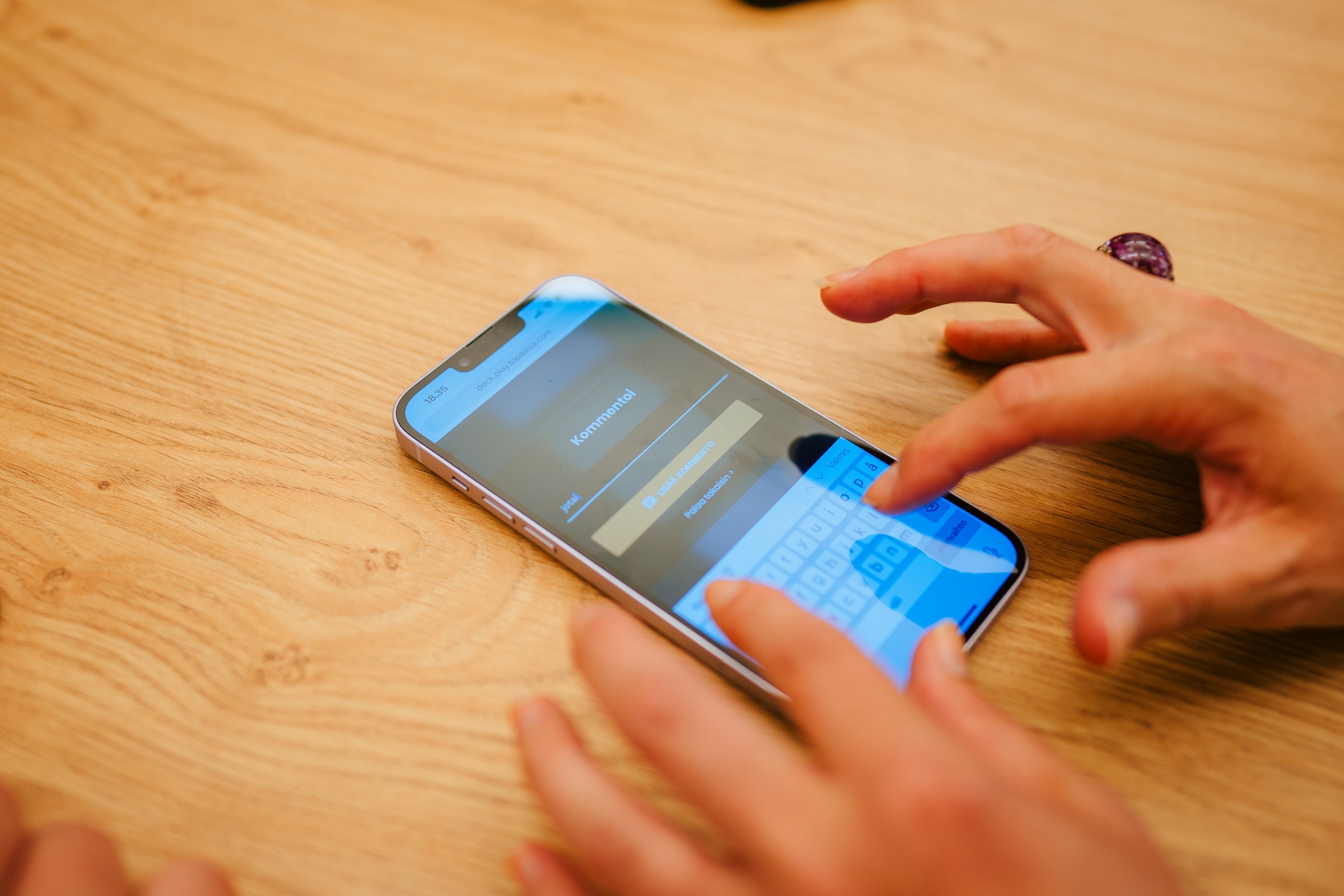
Mikko highlights how easy the documentation is: “There is no need to gather the information separately; the game reports accumulate on the platform as you play.” Collecting the discussion material with the tool was indeed essential, as a total of 59 games were played at Hoivatie, lasting an average of one hour and 20 minutes. “If I now estimate that merely running the discussions would equal 60 hours of consulting work, I would bet it would cost more than what Topaasia's licence package cost us”, Mikko reflects.
At the end of the process, Mikko had in his hands the card choices from all the games, which in themselves offered interesting data. The resulting information was also well in line with the results of wellbeing surveys, among other things. In addition to confirming the right direction, the material produced a great deal of information about the real challenges people experience. Mikko considers it important that the results are genuinely based on people's card choices.
“Nobody has been told to pick certain cards; they have simply ended up being chosen. Then, surprisingly, some card has been chosen 45 times out of 59 games. Naturally it is worth looking at what card this actually is, and what has been said about it.” Through this, both strengths and clear development areas came to light.
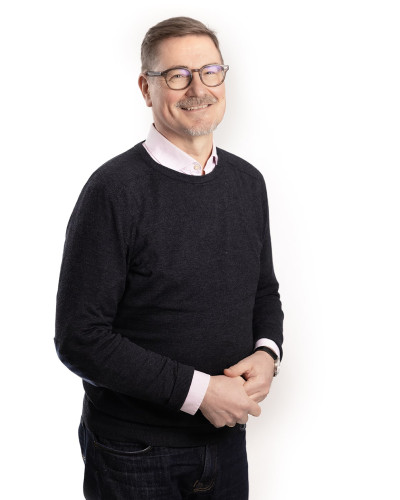
Mikko Oranen is the Development Director at Hoivatie.
Making dialogue part of the organisational culture
The discussions held with Topaasia have been received positively at Hoivatie. Numeric feedback was given for 27 games, averaging 4.3 on a scale of one to five. The verbal feedback was also mostly positive, and other uses were seen for the game beyond working on the strategy.
Mikko mentions two major future uses for Topaasia in the organisation. “The first is team functionality: things like a well-functioning work community, wellbeing at work, psychological safety. These themes are always important in communities. The game could be run by someone a bit further from the day-to-day work, say the development director or an HR person, or alternatively the direct manager”, Mikko ponders. In addition, Hoivatie is exploring the idea of individual games and considering, for example, how Topaasia would work in development discussions.
Mikko feels that developing the culture of conversation is more topical than ever, and Topaasia is a tool that meets this need.
“The concept is really good. Dialogue is central when we talk about development or how organisations function. The essential things are safety, creating space for conversation, alternating between speaking and listening. Topaasia's dialogue tool answers this need: the game creates the framework, it structures, limits the time and produces the documentation. It is simply spot on.”
Thank you Mikko and Hoivatie!