
At Vincit's Nonconference event, the Topaasia deck Expert Partnerships was launched. The game was made in collaboration with Vincit's Partnership Director Toni Mikkola. In this interview Toni shares the thinking behind the deck and its launch with Vincit's partners at the Nonconference event.
The IT world and expert partnerships
According to Toni, partnerships, especially in the IT world, are far too often seen not as genuine, equal partnerships and a network, but as a subcontracting function, where people are talked about as resources at a kind of price-per-kilo judged by skill level and hourly rate. "Listed companies" like Vincit hold the position of power, and scale and cost benefits are extracted from smaller subcontracting companies and freelancers.
"Every now and then, even here, people talk about subcontracting instead of partnerships and slip into corporate-speak about resources. Of course, quite a few new or even established partners are looking for work for their available people. From the start, I wanted to talk about individuals, talent, experts and partnerships, and to try to avoid using the terms subcontracting and subcontractor, even though technically that is often what it is. But even if it is, could we not build around it skills development at the individual and company level, occasionally joint management of client accounts, openness and humanity? I thought that good, aspirational partnership work is a topic from which you can easily pull 52 different cards to support the conversation. Making the deck was a kind of thought exercise that also clarified for me how this topic should be looked at", Toni says about the theme of partnerships, and continues:
"I have tried to look at the matter universally, not just through IT glasses, so the game can be used, for example, by architecture firms and construction companies with each other."
The game's themes aim at building excellent partnerships
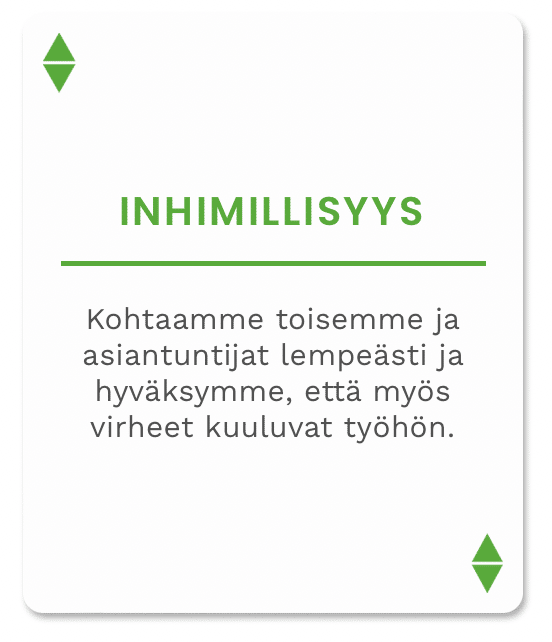
The Expert Partnerships deck consists of four themes: creating customer value, leading the partner network, collaboration and the expert.
The Creating Customer Value theme
According to Toni, partnerships and networks are ultimately built for customers. That is why creating customer value is at the centre when talking about networks and partnerships. The most essential value can arise from anywhere in the network, but usually better value is reached by combining the means of value creation across different actors.
The Expert theme
At Vincit, a people-first and practitioner-first approach has always played a central role. That is why the expert earned one of the suits in the deck, elevating it to the same importance as customer value. "It also rhymes with Vincit's established goal. Tomorrow, more satisfied customers and employees. No matter whose employees", Toni says.
The Leading the Partner Network and Collaboration themes
Leading a network is both creation and facilitation, and Toni admits that at the moment the shape of the network is still too star-like. With Vincit at the centre and the partners disconnected from each other, some of the benefits of a networked way of working are surely left unrealised.
"This deck emphasises that partnership work should mean collaboration between more than two companies. But naturally a network consists of relationships between two companies, so including that perspective as its own theme was important too. Even though ways of working that are as standardised as possible make things easier, and in the end at least IT companies often feel like all-too-unique copies of each other, every company relationship is a little different", Toni reflects.
Toni clarifies that the game's suits are perspectives on building the kind of partnerships worth aiming for, ones that come as a positive surprise to new partner companies.
"It still seems to come as a positive surprise to partners starting out with us that we want to make sure the participating practitioners' own aspirations are also fulfilled. We don't want a partner to propose their experts for our project because a deal must be closed and the bench must be cleared. We want them to come to a place and a role they genuinely want, where they enjoy themselves and where they get to develop towards their own goals as experts", Toni sums up.
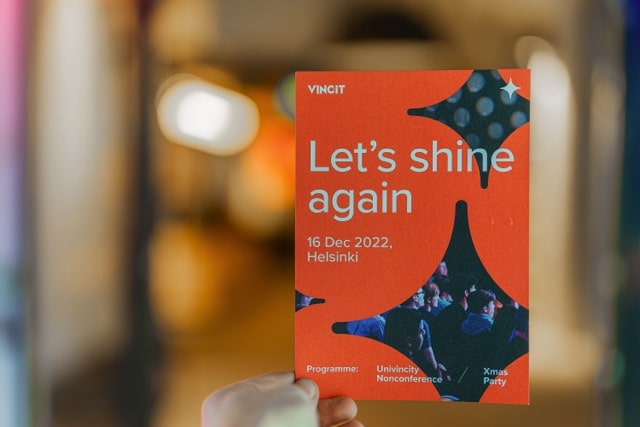
The deck was launched at Vincit's Nonconference event
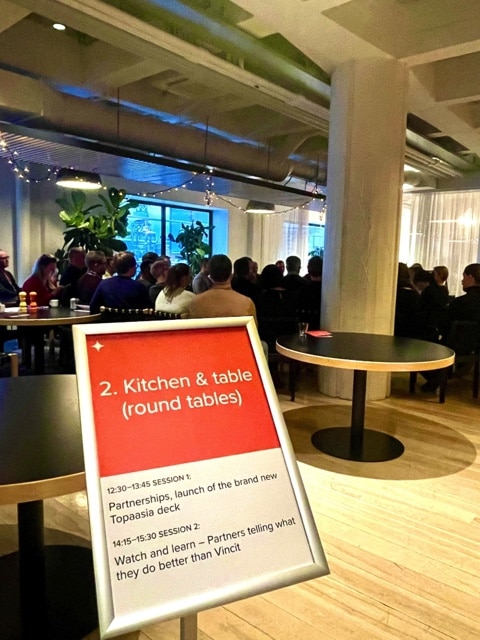
The deck was played for the first time at Vincit's internal Nonconference event. It is an annual internal company event, to which Vincit nevertheless invites a handful of its partners. At last December's event, the Expert Partnerships game was played among partners at three game tables. Toni says Topaasia was chosen especially for its way of cutting to the core of things:
"We ended up using Topaasia because it works fast and breaks the ice. In the conversations you get to the essential things quickly. At Nonconference there are companies present that have never seen each other and that compete with each other for the same client accounts and for Vincit as a customer. In this setting, Topaasia helps get past the competitive set-up and possible caution, and dissolves unnecessary reserve. Through playing, we quickly reached the point where similar companies in the same field started working things forward together. In the end everyone was excited and satisfied."
Playing brought focus to shared fundamentals
According to Toni, playing confirmed that despite differing perspectives, there were many shared values and goals with the partners for developing the work; among other things, information sharing and openness were emphasised in partnership work. The conversations surfaced fundamentals that were already known, but clearly new was also the partners' desire for a community.
"Through the games, the idea was reinforced that the work should move more and more towards facilitating the network, away from the star formation controlled by Vincit. Someone might of course think that sharing power also means giving up a competitive advantage, but I see it more as an opportunity to create business value for everyone through facilitation", Toni says, and continues on how the development of partnership work goes on:
"I am proud of our partnership work overall. I would claim we are one of the best principals in this field in Finland. It says a lot about principals in the IT industry that even though things are really good here compared to others, in the end the most essential next steps and observations will still focus on absolute fundamentals. We are not yet fine-tuning details, refinements and novelties."
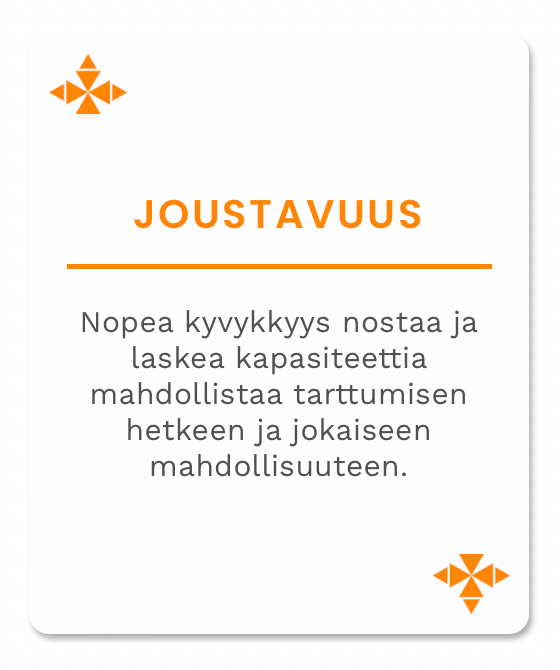
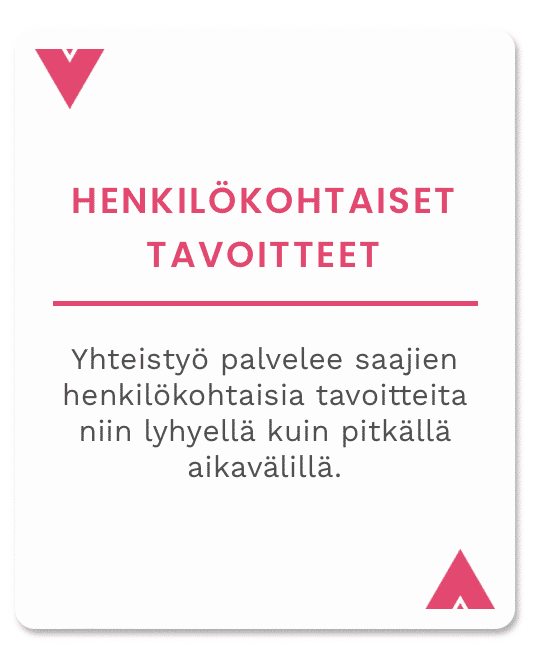
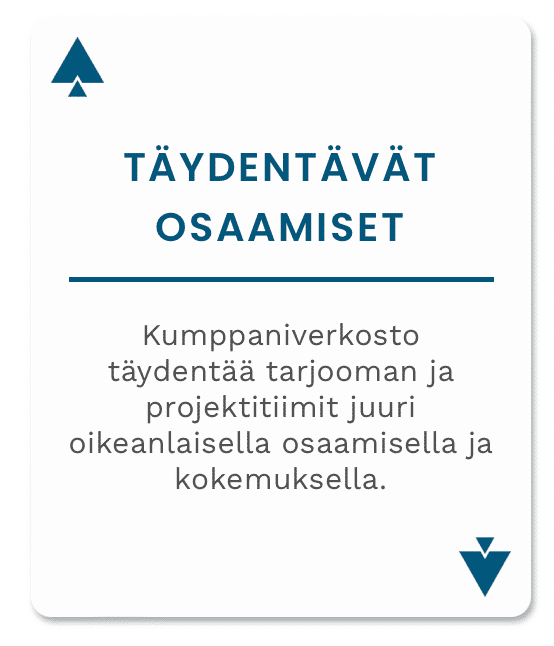
For what situation would you recommend the Expert Partnerships deck?
Based on Nonconference and Vincit's internal games, Toni recommends playing the Expert Partnerships game in two different contexts:
1) For a team leading partnerships inside a company
"At least in our case, the game seems to go brutally after the things we may have already identified as areas for development, but Topaasia highlights the urgency of the issues, prioritises the order and ends up with concrete actions on a schedule", Toni says.
2) For joint play between several partner companies
"The game worked excellently for several companies playing together, because it helps bypass the natural feelings of barriers. Usually when a larger group talks, people easily stay in their own trenches. Topaasia helps you get into dialogue with open cards through its fast pace and the positively provocative sentences on the cards", Toni summarises, and sums up how the game's cards also serve as goals for how Vincit wants to work with its partner networks:
"The 52 positively utopian cards in the game are, in a way, 52 goals we want to bring into Vincit's partnership work. The fact that we play with those topics always takes us a little in that direction. Not every card can be worked on separately all the time, but many cards are in synergy, so the same action advances several goals".
—-
Thank you Toni, Vincit and partners!
Try the Expert Partnerships game
Start Topaasia's free 30-day trial, where you can try the game with your teams right away. The trial is free and involves no commitment.