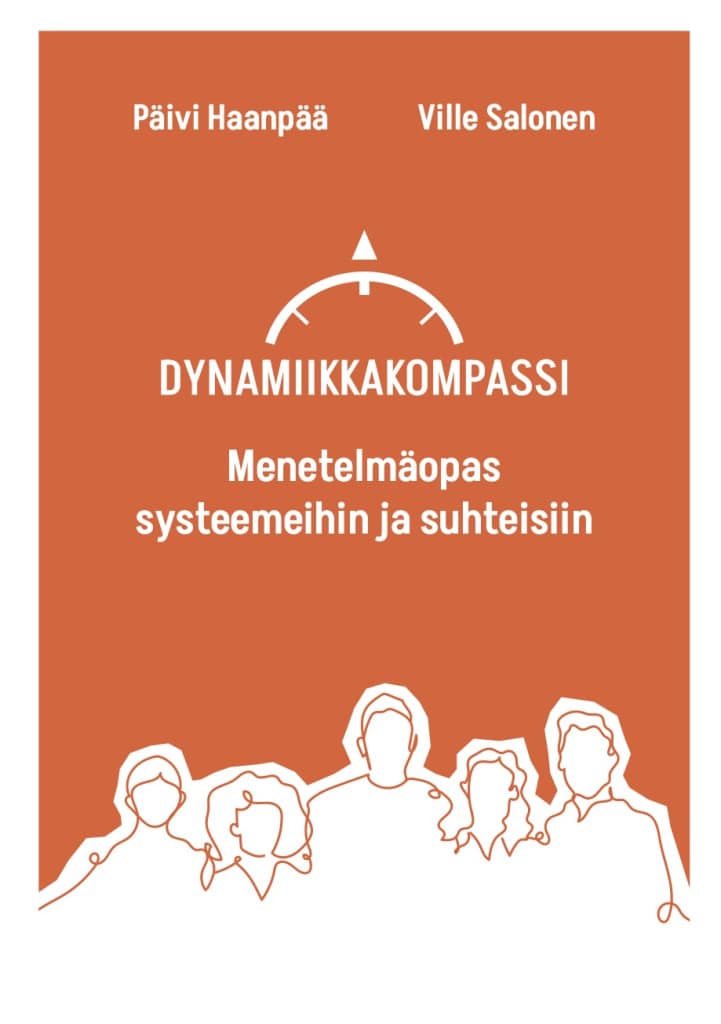
Ville Salonen (psychiatric nurse, psychotherapist, work supervisor) is the developer of the Dynamics Compass. The Dynamics Compass - a method guide to systems and relationships was published in autumn 2025, and game content based on the Dynamics Compass was immediately created for the Topaasia platform, making it even easier to bring up and work through its themes in work communities. In this guest post, Ville opens up the background and workings of the Dynamics Compass.
Where it all began
I am Ville Salonen, a psychotherapist and trainer work supervisor from Tampere. In my childhood I was fairly shy and avoided being the centre of attention, which often led me into the role of an observer. From this position grew an interest in interaction between people, and in why collaboration sometimes runs smoothly while at other times even small things cause friction.
I began to ponder how I could make people's different ways of working visible without pigeonholing anyone.This observer's perspective has followed me into working life, where observing and listening have been my core skills. In workplaces and relationships I often encountered the same challenges: roles get mixed up, needs and expectations stay hidden, and interaction stutters even though everyone is aiming for the common good. At the start of my career I encountered these phenomena again and again, at times also taking part in them myself. Later, in therapy work and in work supervision, I saw that conversations often circled around problems, and people's strengths stayed in the background or were never brought up. I began to ponder how I could make people's different ways of working visible without pigeonholing anyone.
The birth of the Dynamics Compass
In 2015 I sketched the first Dynamics Compass for a work supervision group. At first it was a simple four-field matrix, where the vertical axis represented orderliness and the horizontal axis speed. Participants placed themselves in this model, which made the differences within the group visible. The conversation began to shift from problems towards strengths and the benefits of difference. We learnt new things from each other.
Since then I have used the Dynamics Compass with hundreds of clients and trained social and healthcare professionals and managers in its use. Over ten years the method has been refined and diversified, but its basic idea has remained the same: people are more multifaceted than individual stories about them suggest. With the compass, strengths can be identified, roles clarified and shared understanding built.
I have often been asked to write the method down, but I did not previously feel ready for it. For a long time I thought the compass would be too simple to publish. Through the positive feedback of colleagues and clients I came to understand that its simplicity is precisely its strength. Last spring I asked Päivi Haanpää to join me in collaboration, because I valued her ability to crystallise language, mind and meanings.
We wanted to make a guide that is practical and easy to apply. The book contains exercises, example stories and different perspectives. It is aimed at therapists, work supervisors, HR professionals, educators and everyone who works with people or wants to understand their own behaviour and relationships better.
If you want to understand why people act the way they do, and how behaviour can be changed, the Dynamics Compass is worth exploring. It does not define who you are, but helps you see how you act in a given situation. Above all, it opens up the possibility to move, to change and to find new solutions.
You can get to know Ville better here:
Dynamics Compass introduction video