
Company culture is the heart of an organisation: it defines how people act, communicate and feel at their workplace. A good culture is not just a nice extra; it directly affects employee engagement, productivity and innovation.
In this article we dive into what company culture is, what it consists of, and how company culture can be built to support the organisation's goals.
What is company culture?
Company culture refers to the organisation's shared values, attitudes and ways of working that guide work and interaction in the work community. A good culture is a competitive advantage that attracts the best talent to the organisation, increases employee engagement and creates the conditions for success even in turbulent times.
Panu Luukka, Finland's leading expert on company culture, defines company culture as follows:
"An organisation's success is always made by people. People are the organisation's central maker and enabler of change, in both directions. Culture is the tool with which people are guided to do the right things from the organisation's perspective. The best definition of company culture comes from William Wolfram, who defines culture as what happens when no one is watching. "Investing in company culture yields impactful benefits from the organisation's perspective. Company culture directly affects employee satisfaction, motivation and productivity. A good culture promotes openness, trust and team spirit, which lead to better business results.

Many books have been written about company culture, one of the best known being Yrityskulttuuri on kuningas - Mitä, miksi ja miten (Luukka, 2019)
What does company culture consist of?
Company culture consists of several different elements that define the organisation's ways of working and its atmosphere:
1. Values and norms: The company's core values and operating principles that guide decision making and behaviour. These can also be called the cornerstones of company culture.
2. Leadership: How leaders behave, communicate, support and motivate employees. Are the leaders fair and just, and do they hold a positive view of people?
3. Communication: Openness and interaction between teams and management. As Wiio once playfully put it: "all leadership falls down on communication, and communication on leadership".
4. Work community and environment: The physical spaces, structures and technologies that support the work. Are the basics of the work community, such as holidays, salaries, insurance, working conditions and so on, in order? A good company culture requires the basics to be in order. It is true that some cultures offer, for example, a stronger sense of meaning rather than, say, work-life balance, but then it is the right culture for those people who are looking for a place to fulfil their own personal sense of meaning.
5. Community spirit: Team spirit and collaboration between employees. There is a well-known book on the subject, "The No Asshole Rule", which stresses that a good team and community has no room for rotten apples to spoil it. That is why many technology companies emphasise "cultural fit" in their recruitment.
6. View of people:What kind of view of people do our personnel and leaders hold? Do we see people fundamentally as lazy opportunists, or as hard-working colleagues who want to do their best?
Developing and leading company culture
A culture emerges and forms in every community, whether attention is paid to it or not. In companies, developing culture aims particularly at the themes of employee wellbeing and effectiveness, and by consciously focusing on culture you can at the very least ensure it does not drift in an unwanted direction.
An excellent company culture does not emerge by itself but requires continuous development. Developing culture begins with management's commitment, example and a clear vision of what kind of culture is to be built. After that, structures and practices must be created that support the desired ways of working.
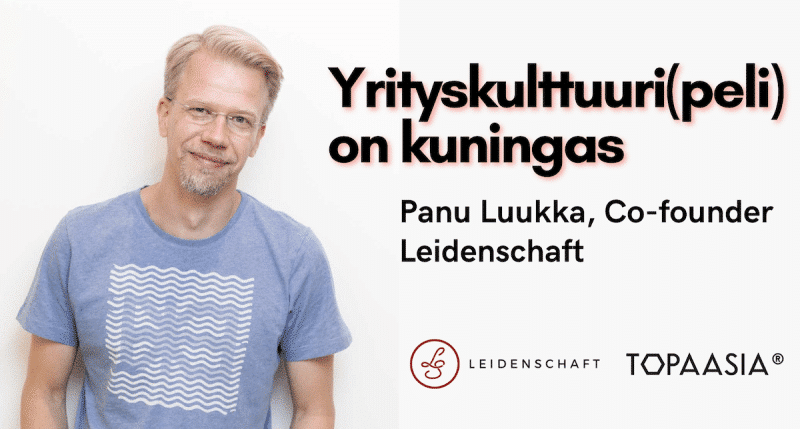
Read the longer interview with Panu Luukka
The Company Culture serious game: an effective, engaging and fun way to develop company culture
Topaasia, Panu Luukka and Leidenschaft have created the Company Culture game in content collaboration for Topaasia's digital serious game platform.
With the game, groups discuss, identify and develop their company culture in a way where everyone gets an equal voice and the group reaches practical results in an hour.
The game has 52 cards, divided into the themes Cornerstones, Structures, View of People and Leadership. With the cards, the participants form views that make it possible to decide what matters for developing their own company culture.
-> Try the Company Culture game free of charge <-
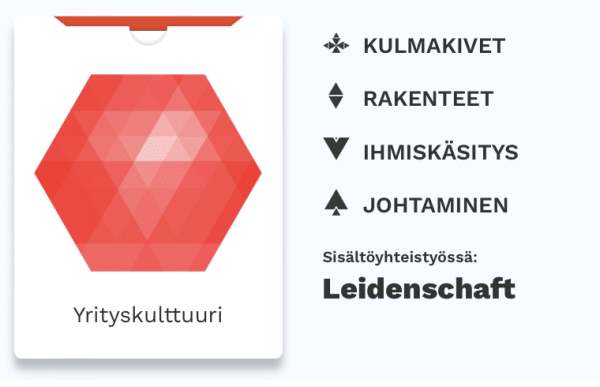
The company culture development game consists of 52 cards, divided into the themes Cornerstones, Structures, View of People and Leadership
Useful links
Panu Luukka - homepage Leidenschaft
Try the Company Culture game free of charge for a 30-day trial period Company culture (game) is king! Panu Luukka in Topaasia's interview